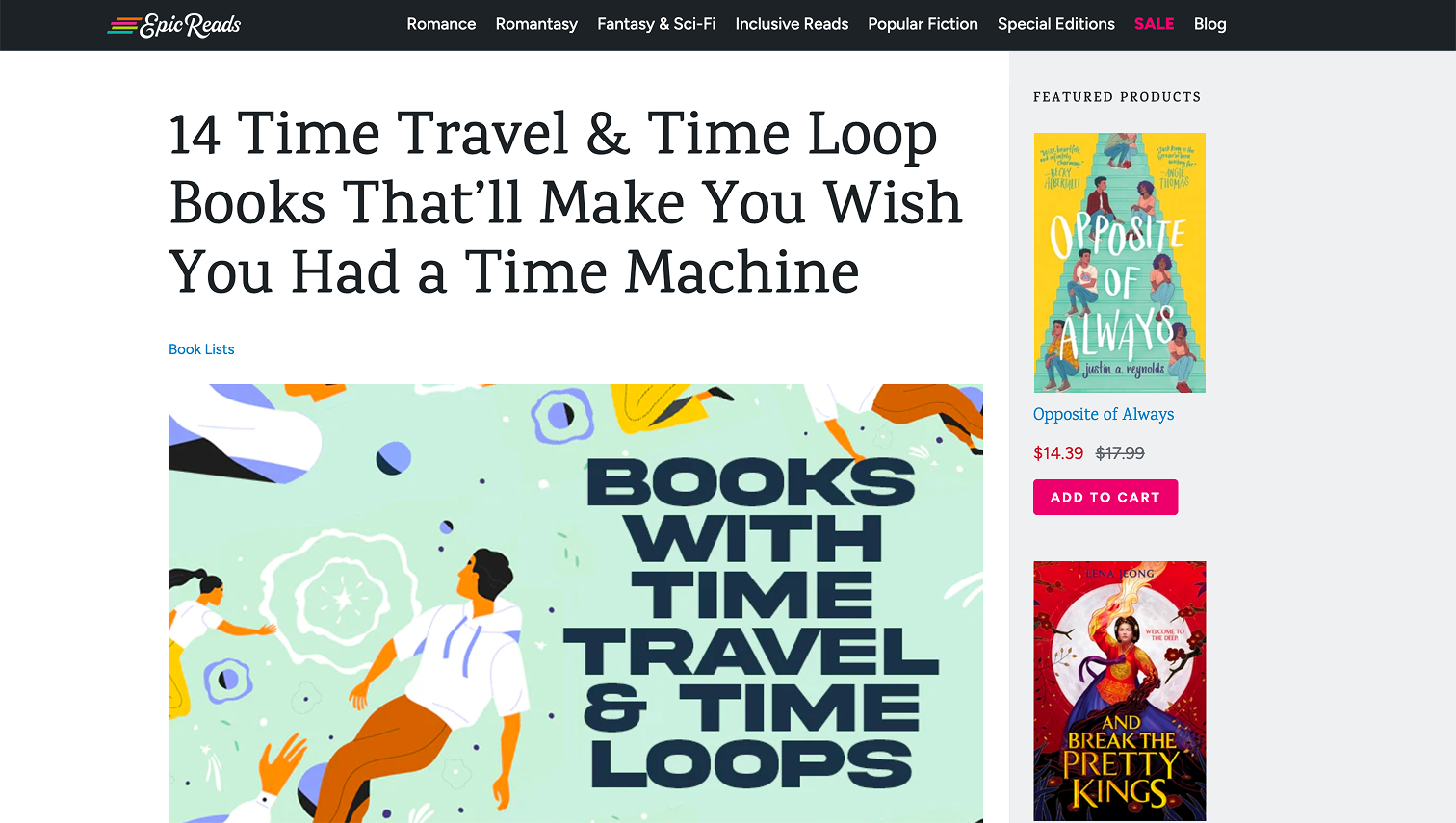
How Epic Reads Grew Sales 24% With Search-Driven Content
Content Strategy

+24%
Online Sales
+35%
Organic Traffic
234
New Top-3 Keywords
Epic Reads, HarperCollins' young adult book blog, was publishing more than 10 articles a week, but very little of it was driving organic traffic. The content resonated with their existing audience, but it wasn't aligned with what new readers were searching for.
When I came in to lead SEO, I was tasked with reworking the content approach so every piece was driven by data, not instinct, and tied back to business results.
The strategy focused on capturing high-demand searches, bringing those readers to book detail pages, and turning that traffic into sales.
The first step was identifying what content Epicreads.com was missing that their audience was searching for.
A gap analysis revealed a clear opportunity. Epic Reads had limited content targeting "best books by genre" searches. The few pages that did exist were going after highly competitive terms and weren't performing well.
So instead of chasing competitive queries, I focused on topics they had a good chance to show up for. Things like "best time travel books," "best heist novels," and "best poetry books for teens." People searching these are actively looking for recommendations and are often close to making a decision. We made these types of queries the core focus of the content strategy moving forward.
| Keywords | Volume | Opportunity |
|---|---|---|
| time travel books | 1.9K | |
| zombie books | 1.6K | |
| emotional books | 1.0K | |
| young adult fantasy books | 1.0K | |
| love triangle books | 590 | |
| heist books | 480 | |
| poetry novels | 210 |
After identifying ~50 priority keywords based on search volume, conversion potential, and competition, I created detailed content briefs to guide the writing team.
Each brief acted as a precise blueprint outlining the topics to cover, content structure, page layout, metadata, internal linking opportunities, and clear paths to guide users to book pages.
The focus was on creating content that matched search intent and made it easy for readers to find and buy books.
Every article was optimized across key on-page elements:
As we built out more "best books by genre" content, we organized it into a topic cluster. A central category page acted as the hub, with individual lists supporting it.
Internal linking connected the hub to each list and tied related pages together. Someone reading "best zombie books" could easily move to vampire, werewolf, or dark fantasy lists.
This structure helped build topical authority by creating depth across book genres and signaling clear relationships between pages. It made it easier for both users and search engines to navigate the content and reinforced the site as a credible source on the subject.

Publishing was only the first step. After launch, I monitored traffic, click-through rates, and conversions for every article. Underperforming pieces were revisited by strengthening internal links from higher-authority pages, refining meta tags, reworking intent, expanding thin sections, adding visuals where engagement dropped, and more.
Within six months, Epicreads.com ranked in the top 3 on Google for 234 new book genre keywords with strong purchase intent. This resulted in a 35% increase in organic traffic, and more importantly, a 24% increase in online book sales year-over-year.
The team was already producing great content. Aligning it with the right searches made sure it reached the right audience.
+24%
Online Sales YoY
+35%
Organic Traffic
234
New Top-3 Rankings
On this page

How XVIVO's traffic jumped 45% after a full SEO rebuild
+27%
Organic inquiries
+45%
Organic clicks

Rukkus ticket sales soar 451% with strategic link building
+1,256%
Traffic increase
121K
New visitors

Best Western boosts AI Overview visibility by 349%
+349%
AI Overviews
+18.5%
Organic traffic

Chase was losing high-intent traffic to competitors on its best pages.
+69.8%
Organic clicks
+21.3%
Impressions